
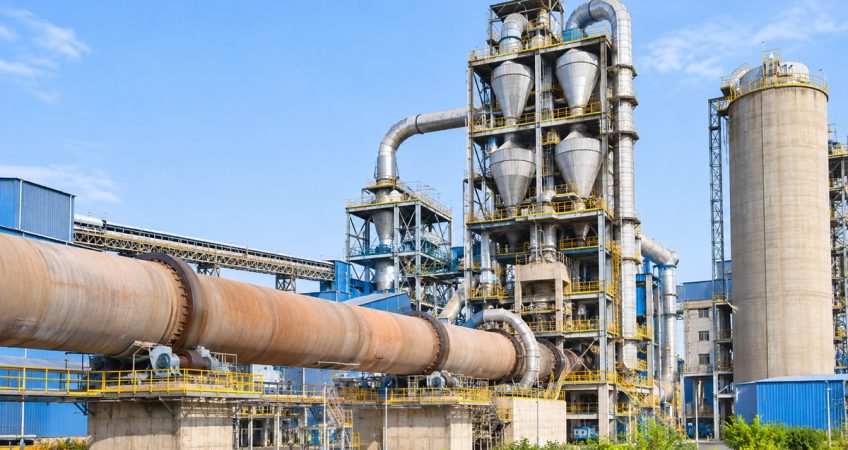
Most preheater plugging problems get treated as cleaning problems. The lower cyclones block, the plant pokes and lances, production is lost for a shift, and the cycle repeats. Somewhere in the middle of that routine, a cement kiln bypass system gets mentioned, usually by an equipment supplier, and the plant has no independent basis on which to judge whether it needs one.
The honest answer is that a bypass is sometimes the only solution and often an expensive way to avoid fixing something cheaper. Telling the two apart requires understanding the circuits that cause the problem, because the same symptom can come from an input you could simply stop buying.
This article covers how the volatile circuits actually work, how to establish whether yours are out of control, what a bypass does and does not fix, and what it costs you in heat and in dust you then have to dispose of.
What Is Actually Circulating
Three elements behave in a way that creates the problem: the alkalis, sodium and potassium, plus chlorine and sulphur. They enter with the raw materials and the fuel, and instead of leaving with the clinker they evaporate in the hot end and condense in the cooler end, which means they accumulate.
The mechanism is a loop. In the burning zone, alkali chlorides, alkali sulphates and calcium sulphate vaporise. The gas carries them up the kiln and into the preheater, where temperature falls and they condense onto the meal and onto the walls. The meal then travels back down into the kiln, where they vaporise again. Each pass adds the new input arriving with feed and fuel, so the concentration inside the loop climbs far above the concentration entering the plant.
Chlorine is the worst of the three because it is the most volatile. It vaporises in the sintering zone at roughly 900 to 1200 degrees Celsius and condenses in the riser and lower cyclones at roughly 700 to 900 degrees. Almost none of it leaves with the clinker, so almost all of it recirculates. The compounds it forms with the alkalis, potassium chloride and sodium chloride, melt at low temperature and stick to surfaces, which is why chlorine rather than sulphur is usually the element that physically stops the plant.
Sulphur recirculates too, but a larger share of it fixes into the clinker, so the enrichment is less severe. Its problems are different: kiln inlet build-up, sulphur spurrite formation, and SO2 at the stack.
Where It Shows Up
Before any discussion of a cement kiln bypass system, it is worth knowing where the build-ups form, because they appear where the condensation happens. In practice that means the kiln inlet duct, the riser, and the ducts and cones of the lower cyclone stages, with harder rings sometimes forming near the calciner or at burner level.
Five symptoms are worth treating as a circuit problem rather than a cleaning problem:
- Preheater pressure drop rising over days or weeks, with no change in feed rate or fan setting. The gas path is narrowing.
- Plugged calciner notches and cyclone cones recurring in the same locations, not randomly.
- Erratic feeder and meal flow behaviour, as material hangs and then releases.
- Rings requiring quenching or breaking on a schedule rather than occasionally.
- Shortening intervals between cleaning stoppages, which is the clearest single indicator that the circuit is enriching faster than the plant is removing material.
The last one matters most. A plant that cleans the preheater every three months and has moved to every three weeks has a circuit problem, whatever the individual cleaning reports say.
How Much Chlorine Is Too Much
This is where the cement kiln bypass system decision gets quantitative, and where published guidance is useful.
Total chloride input above roughly 0.05 percent, on a loss-on-ignition-free basis, is generally associated with severe plugging. Below about 0.02 to 0.03 percent is normally manageable. Expressed on clinker, a cyclone and precalciner kiln without a bypass should generally stay within about 200 to 300 milligrams of chlorine per kilogram of clinker.
Note that these two ways of expressing the limit use different bases and should not be read as equivalent. The practical step is to measure your own total chlorine input, from every source, and express it the same way each time so the trend means something.
That input audit is the work people skip, and it is the step that decides whether a bypass is necessary. Chlorine arrives from limestone and corrective materials, from coal and petcoke, from alternative fuels, and sometimes from water. It is common to find that one input contributes most of it, in which case changing that input is a far cheaper answer than installing a bypass.
Why Alternative Fuels Changed This Conversation
The reason circuit problems have become more common is that the fuel changed.
Alternative fuels and raw materials, including plastics, biomass and industrial wastes, commonly contain between 0.05 and 1 percent chlorine. Solid recovered fuel averages around 0.7 to 0.8 percent. Critically, only a small fraction of that chlorine, reported in the range of roughly 0.7 to 13 percent, fixes into the clinker. The rest recirculates or leaves with dust.
So a plant raising its thermal substitution rate is raising its chlorine input at the same time, and the circuit concentrates the difference. ECRA has reported exactly this pattern: greater alternative fuel use leading to higher volatile inputs that then enrich through circulation between the sintering zone and the lowest cyclone stage.
This is the single most important planning point in this article. A plant that intends to increase AFR needs to know its chlorine balance before it commits, not after the preheater starts blocking. The fuel strategy and the circuit chemistry are the same decision, which is why our note on alternative fuel strategies for cement plants and this article belong together.
What a Cement Kiln Bypass System Actually Does
A bypass extracts a portion of the kiln gas before it reaches the preheater, cools it rapidly so the volatiles condense onto dust, and removes that dust from the system. It breaks the loop by giving the chlorine somewhere to go.
Extraction is taken at the kiln inlet or lower riser, at roughly 650 to 800 degrees Celsius, chosen because that is where chloride concentration peaks and dust loading is comparatively low.
How Much Gas Gets Bled
Reported bleed rates range from 1 to 10 percent of kiln gas, with operators commonly running 5 to 15 percent, and FLSmidth and IPPC data citing 10 to 15 percent as typical for chlorine control.
A useful rule of thumb from the literature: each 1 percent of bypass flow allows roughly 100 milligrams more chlorine per kilogram of clinker. On that basis an 8 percent bypass raises tolerance to around 800 milligrams per kilogram. That relationship is what lets you size a bypass against a measured chlorine input rather than against a supplier’s standard offering.
What It Removes, and What It Does Not
Here is the asymmetry that catches plants out. ECRA survey data indicates a well-designed bypass removes roughly 20 to 75 percent of total chlorine input, but only about 2 to 12 percent of total sulphur input.
A bypass is therefore a chlorine solution. If your actual problem is sulphur, a bypass will cost you heat and dust without fixing it, and the correct response lies in the alkali to sulphur balance, in combustion conditions and in raw mix design instead. Diagnosing which element is driving your build-ups, before specifying equipment, is the whole value of doing the chemistry properly.
The Two Costs Nobody Puts in the Capex Case
Heat. A cement kiln bypass system extracts gas hot and never does its job in the preheater, so the heat in it is lost. That loss is real, it is proportional to the bleed rate, and it is permanent for the life of the plant. It has to go into the operating cost case alongside the fuel saving the AFR was supposed to deliver, because the two partly cancel. A plant that justifies a bypass purely on avoided downtime and then discovers the heat penalty has mis-stated its own business case.
Dust. Bypass dust is not ordinary kiln dust. It is several times richer in chlorine and potassium, which is the point, but it also means it cannot simply be returned to the process. Air classification can concentrate it further, producing a fine fraction with two to three times the chlorine of the feed, and some operations leach that fraction to recover potash. More commonly the dust is landfilled or used in niche applications, with only a small controlled portion returned to the kiln to balance alkalis.
So the bypass creates a waste stream with a disposal cost and, in many jurisdictions, a regulatory obligation. That belongs in the project evaluation from the start. A cement plant feasibility study that prices the equipment and omits lifetime dust handling has understated the project.
When a Bypass Is Genuinely the Right Answer
Taking all of that together, a bypass is justified when the chlorine input has been measured and is genuinely above what the system can tolerate, when the input cannot be reduced by changing a raw material or fuel source at acceptable cost, when chlorine rather than sulphur has been confirmed as the driver, and when the lost production from cleaning stoppages outweighs the heat penalty and dust handling cost over the life of the plant.
Where those conditions hold, the returns can be substantial because the bypass unlocks fuel flexibility rather than merely restoring availability. One published example is instructive: Votorantim Cimentos in Brazil installed a chlorine bypass costing around 10 million US dollars on a 5 million tonne per year line, after which co-processing rose from 45 to 73 kilotonnes per year, an increase of 62 percent, displacing 12 kilotonnes per year of petcoke and cutting roughly 12,200 tonnes of CO2 annually.
Read that correctly. The bypass was not justified by cleaner cyclones. It was justified by the alternative fuel volume it made possible, which is a fuel cost and emissions case, not a maintenance case.
What to Do Before Specifying Equipment
- Build a complete input balance for chlorine, sulphur and alkalis across every raw material, every fuel and any water, expressed consistently.
- Measure the circuit, not just the inputs. Hot meal sampling at the kiln inlet and at the lower cyclone stages shows the enrichment factor, which is what distinguishes a high input from a poorly behaved loop.
- Identify which element is driving the build-ups by analysing the deposits themselves rather than inferring it.
- Test whether the input can be reduced. If one material or fuel supplies most of the chlorine, costing a source change is the cheapest option on the table and should be evaluated first.
- Check the gas circuit and combustion before blaming chemistry. Reducing conditions and poor combustion worsen sulphur problems independently of input, and uncontrolled air ingress distorts the gas path. Our piece on false air in a cement plant covers the measurement.
- Size the bypass against your measured input using the tolerance relationship above, rather than accepting a standard percentage.
- Cost the heat loss and the dust disposal across plant life, and put both into the same case as the fuel saving.
Most plants that work through those steps before specifying a cement kiln bypass system find one of two things. Either the input is reducible and no bypass is needed, or the bypass is justified and they now know what size it should be. Either outcome is better than buying equipment on a symptom.
Where the work points to process changes rather than equipment, the corrected operating basis is established through cement plant process design, and the build-up and ring consequences for the lining fall to cement kiln refractory engineering. Where a bypass is confirmed, the extraction point, gas cooling, dust handling and tie-ins become cement plant detail engineering scope.
FAQs:-
What is a cement kiln bypass system?
It extracts a portion of kiln gas before it reaches the preheater, cools it rapidly so the volatile compounds condense onto dust, and removes that dust from the system. The purpose is to break the recirculating loop in which chlorine, alkalis and sulphur evaporate in the burning zone and condense again in the preheater, concentrating far above the levels entering the plant. Extraction is usually taken at the kiln inlet or lower riser at roughly 650 to 800 degrees Celsius, where chloride concentration peaks and dust loading is relatively low.
How much chlorine can a preheater kiln tolerate without a bypass?
Published guidance puts severe plugging at total chloride input above roughly 0.05 percent on a loss-on-ignition-free basis, with below about 0.02 to 0.03 percent normally manageable. Expressed on clinker, a cyclone and precalciner kiln without a bypass should generally stay within about 200 to 300 milligrams of chlorine per kilogram of clinker. These are different bases and should not be treated as equivalent. The useful step is to measure your own total chlorine input from every source and express it consistently so the trend is meaningful.
How large a bypass do we need?
Reported bleed rates run from 1 to 10 percent of kiln gas, with operators commonly at 5 to 15 percent and 10 to 15 percent cited as typical for chlorine control. A rule of thumb from the literature is that each 1 percent of bypass flow allows roughly 100 milligrams more chlorine per kilogram of clinker, so an 8 percent bypass raises tolerance to around 800 milligrams per kilogram. That relationship lets you size against your measured chlorine input rather than accepting a supplier’s standard percentage.
Will a bypass solve our sulphur build-up problem?
Probably not, and this is the most costly misunderstanding in this subject. ECRA survey data indicates a well-designed bypass removes roughly 20 to 75 percent of total chlorine input but only about 2 to 12 percent of total sulphur. A bypass is a chlorine solution. If sulphur is driving your build-ups, a bypass will cost you heat and create a dust stream without fixing the problem, and the answer lies instead in the alkali to sulphur balance, in combustion conditions and in raw mix design. Analyse the deposits to confirm which element is responsible before specifying anything.
Does increasing alternative fuel use make circuit problems worse?
Usually yes, and it should be planned for. Alternative fuels and raw materials commonly contain 0.05 to 1 percent chlorine, with solid recovered fuel averaging around 0.7 to 0.8 percent, and only a small fraction of that chlorine, reported at roughly 0.7 to 13 percent, fixes into the clinker. The rest recirculates. ECRA has reported higher volatile inputs following greater alternative fuel use, enriching through circulation between the sintering zone and the lowest cyclone stage. Any plant planning to raise its substitution rate should establish its chlorine balance first.
What happens to bypass dust?
It cannot simply be returned to the process, because it is several times richer in chlorine and potassium than ordinary kiln dust, which is the whole point of removing it. Air classification can concentrate it further, producing a fine fraction with two to three times the chlorine of the feed, and some operations leach that fraction to recover potash. More commonly the dust is landfilled or used in niche applications, with only a small controlled portion returned to balance alkalis. The disposal route and its cost belong in the project evaluation rather than being settled after commissioning.
What does a bypass cost in heat?
Bypass gas is extracted hot and never performs its heat exchange duty in the preheater, so the heat it carries is lost permanently and in proportion to the bleed rate. This matters commercially because a bypass is often installed to enable alternative fuel use, and the heat penalty partly offsets the fuel saving. Both numbers belong in the same operating cost case. A business case built only on avoided cleaning downtime, without the heat loss and the dust handling cost over plant life, understates the project.